


Masha and the Bear: My Friends
4.1180.00 Reviews
App Specs
- Version
- 1.1.10
- Updated On
- License
- Free
- Downloads
- 50,000,000+
- Developer
- DEVGAME KIDS games
- Categories
- Role Playing
- Platform
- Android, iOS
Screenshots
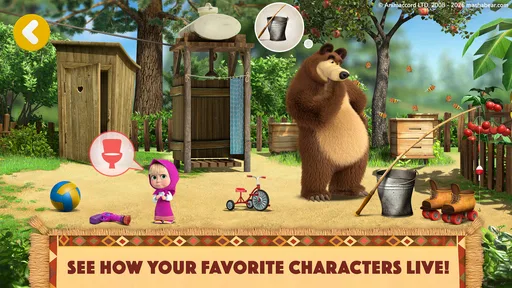
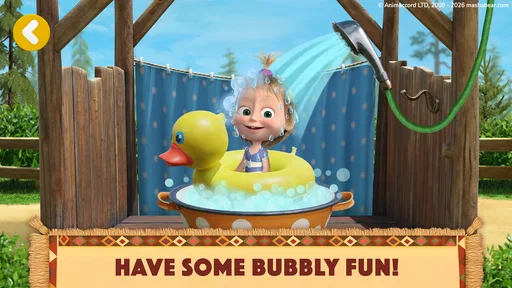
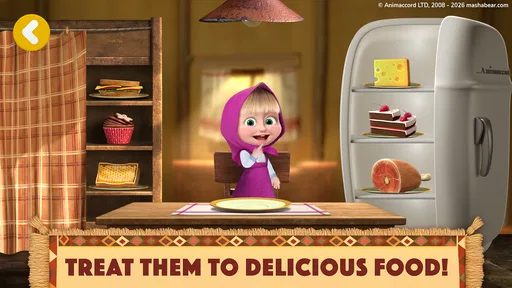
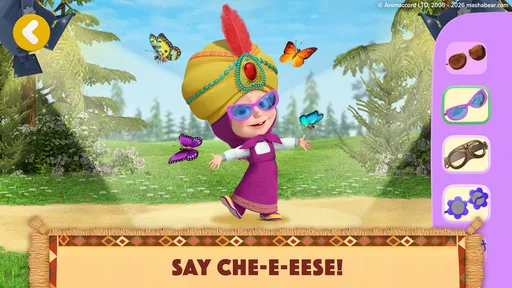
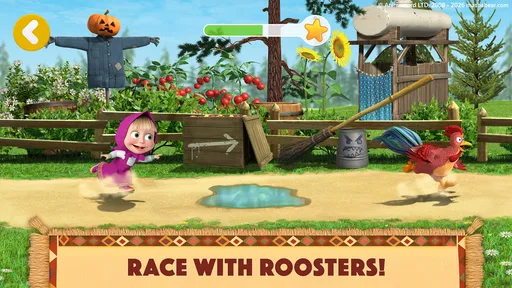
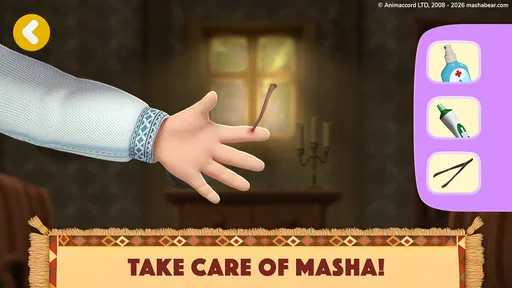
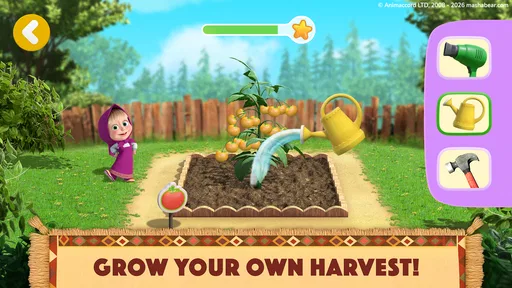
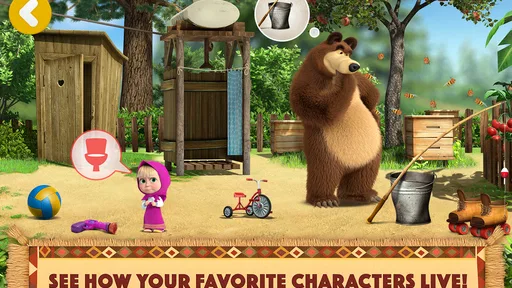
 Analysis by AppCompare
When I tried Masha and the Bear: My Friends, what stood out was how easily a young child can move from one playful activity to another. The familiar characters make it inviting, while the short interactions suit the sort of moment when a child wants something to do but isn’t ready to settle into a long game. I’d think of it as a light, character-led play space rather than a deep role-playing adventure.
A small first step into play
The basic appeal is immediate: children can enter Masha’s world and choose an activity without needing to learn complicated controls. That simplicity matters for preschool-age players, who may be more interested in tapping, watching a response, and trying again than in following a long set of instructions. I’d sit with a child for the first few minutes, not because the idea is difficult, but to help them understand what different choices do and let them settle into the rhythm.
As a role-playing game from DEVGAME KIDS games, it leans on familiar characters and pretend-play energy rather than complex systems. That makes it approachable for a child who enjoys Masha and the Bear but might find traditional role-playing games too demanding. The game is free to download, with optional in-app purchases priced from $0.99 to $39.99 per item, so I’d check the purchase settings on the device before handing it over. A child can enjoy the idea of the game without being the one who decides whether to spend money.
How the activity loop holds attention
The part I find most useful to understand is the repeated pattern: a child chooses something, gets an immediate visual or playful response, and then has a reason to try another activity. That quick feedback makes the experience easy to pick up in small bursts. It also means the appeal is less about mastering one elaborate challenge and more about exploring what happens next in a familiar setting.
For a parent, this can work well as a short transition activity: perhaps while dinner is being prepared or during a quiet wait at home. I’d offer it as a contained play choice rather than assume it will occupy a child for a long stretch. The child can act independently once comfortable, but a nearby adult can still make the play more engaging by asking what Masha is doing or letting the child explain the choices they’re making.
That sort of shared play is also a practical way to judge whether the game suits a particular child. Some children like to tap through several activities quickly; others prefer to repeat the same kind of play. Watching which choices hold their interest is more informative than expecting every activity to appeal equally. It gives parents a simple cue for when to continue and when to switch to a screen-free option.
Familiar characters, with a few trade-offs
The recognizable Masha and Bear setting is a clear strength for children who already know the characters. It gives the activities a context that a generic collection of mini-games may not have, and can make starting feel less like learning a new app. The flip side is that a child who has no connection to the show may get less from the character appeal. In that case, a game built around a favorite animal, creative toy, or open-ended drawing may be a better fit.
Worth Reading Before You Choose

Baby Panda World Brings Quick Play to Modern Phones, but Its Game Library Feels Busy

ESPN’s Live Game View Makes Following Close Games Easier

QuizzLand Review: A Good Fit for Short Trivia Breaks, Not Every Player

Basketball Stars: Multiplayer Is Fast, but Can It Recover When Matches Go Wrong?

WEBTOON Turns Phone Updates Into a Better Reading Routine

Link to Windows Runs on Shared Habits, Not Social Feeds
I’d also keep expectations grounded. This is aimed at young players, so its accessible, familiar approach is more important than intricate mechanics or a substantial story with a long arc. Older children looking for strategy, a demanding progression system, or a more involved role-playing game will probably want something else. The game is at its best when the goal is cheerful, straightforward play, not a test of skill or a substitute for a full console-style adventure.
The game is free, but the presence of paid items is still worth discussing in advance. For a child using a shared device, I’d make sure purchases require an adult’s approval and explain that some choices may involve spending. This avoids turning a relaxed play session into a negotiation at the moment a child wants something. It’s a small setup step that can make the experience easier for both of you.
Who I’d hand it to—and when I wouldn’t
I’d consider it for a young Masha and the Bear fan who enjoys simple, colorful activities and likes being able to choose what to do next. It can also suit a parent who wants a familiar game for brief periods of supervised play, especially when the child is still getting used to navigating apps. The Everyone content rating is consistent with a broad family audience, though that doesn’t replace a parent’s judgement about a child’s screen habits or readiness for in-app purchases.
I’d skip it for a child who gets frustrated by short activities or wants a single game with a clear, steadily developing challenge. I’d also look elsewhere if the main goal is a detailed educational curriculum, a deep virtual-pet simulation, or a completely hands-off way to occupy a child. The store presents it as a Tamagotchi-inspired pet-care experience, but I wouldn’t treat that phrase as a promise of every feature found in classic pet simulators. If a child specifically wants a pet that must be cared for through a detailed routine, it makes sense to compare that expectation with the actual play before relying on it.
Compared with the usual alternatives, the character connection is the main distinction. A general kids’ activity app may offer a wider mix of unrelated games, while a focused virtual-pet title tends to build around one ongoing pet-care routine. This one sits closer to character-based, bite-size entertainment. That’s a useful middle ground for children who want familiar faces and variety, but not necessarily the best match for someone looking for a more structured learning path or a deeper simulation.
Getting Started
Installing Masha and the Bear: My Friends is a breeze. Available on both Android and iOS, it only takes a few taps and you’re in. Once opened, you’re welcomed by the vibrant and familiar world of Masha and the Bear. The graphics are bright and colorful, just like the show, which is sure to catch the eye of any kid.
The app offers a mix of educational and fun activities. Right off the bat, I noticed how intuitive the navigation is. Kids can easily switch between games, puzzles, and other activities without getting lost. The user interface is designed with kids in mind, so it’s all about simplicity and ease of use.
Activities and Games
Now, onto the activities. The app is packed with a variety of games that are not only fun but also educational. From puzzles that test problem-solving skills to mini-games that encourage creativity, there’s a lot to keep kids entertained. One of the standout features is the storytelling aspect. Kids can join Masha and the Bear on various adventures, which is a great way to engage them in narrative play.
What I appreciated most is that the games are designed to subtly introduce educational elements. Whether it's counting, colors, or shapes, kids are learning without even realizing it. It’s like sneaking vegetables into their favorite dish – they’ll enjoy it without knowing it’s good for them!
Visuals and Sound
The visuals are spot on. They’ve done a fantastic job capturing the essence of the animated series. Everything is bright and cheerful, making it appealing to young eyes. As for the sound, it’s equally impressive. The background music and sound effects are engaging but not overwhelming, which is crucial. Plus, the familiar voices of the characters add a comforting touch, making the experience more immersive.
Parental Controls and Safety
Of course, no review would be complete without discussing safety. The app includes parental controls, allowing you to manage screen time and ensure kids are playing safely. There are no intrusive ads, which is a huge plus. Nobody likes being interrupted by ads, especially when it comes to kids’ apps.
There’s also a section where parents can track the progress of their child. It shows what skills they’re picking up and how they’re improving, which is a nice touch for those who want to keep an eye on educational development.
Overall Experience
Overall, Masha and the Bear: My Friends delivers on its promise. It’s a wonderful app that does a great job combining fun and education. It’s perfect for keeping kids entertained while also giving them a little brain workout. The app is well-designed, safe, and offers a lot of variety, which means kids won’t get bored easily.
If you’re looking for an app that your kids will love and you can feel good about, this one is definitely worth checking out. It’s a delightful way for kids to interact with their favorite characters and learn along the way. So go ahead, give it a try and let the adventures with Masha and the Bear begin!
Practical details before you install
The game has a 4.2 average from around 48,000 ratings, and it has been installed over 50 million times. Those figures suggest broad interest, but they don’t tell me whether the pace or activities will suit a particular child; a quick supervised try is still the most useful test. It was released on September 27, 2022, and the current version is 1.1.10. Android users need version 7.0 or later.
For everyday use, I’d treat it as one option in a small rotation rather than the default answer whenever a child is bored. If the game is used during a wait, agree on a stopping point first: for example, finish the current activity, then put the device away. That keeps the quick, repeatable loop from turning into an open-ended session and helps a child move on without the sudden feeling that play has been cut off arbitrarily.
One useful approach is to let the child choose between two activities rather than asking an open-ended “What do you want to do?” A limited choice makes navigation feel manageable, while still giving the child ownership. If they keep returning to one activity, that preference can tell you more about what they enjoy—puzzles, pretend play, or simply seeing familiar characters—than the game’s overall variety does.
My verdict on coming back for another round
The loop works because it doesn’t ask a young player to remember a complicated plan: choose, interact, enjoy the response, then decide whether to repeat or move on. That is a sensible design for short play, although it may feel lightweight to children who want a stronger sense of progress from session to session. I’d recommend it most readily to families seeking accessible character-led entertainment, with an adult setting sensible purchase boundaries and helping establish when play is finished.
My overall recommendation is conditional rather than universal. For a child who recognizes Masha and the Bear and enjoys varied, uncomplicated activities, it is an approachable way to spend a little time. For a child who needs a deeper challenge, a carefully sequenced lesson, or a more demanding pet-care routine, another game will be a better choice. If those expectations are clear, it’s easier to decide whether this cheerful, easy-to-enter experience belongs on your family’s device.
Pros
- Engaging stories for young children.
- Colorful and interactive graphics.
- Educational mini-games included.
- Easy navigation for kids.
- No in-app purchases required.
Cons
- Limited content can be repetitive.
- Requires internet for some features.
- Some ads may interrupt gameplay.
- Not challenging for older kids.
- Large app size may affect storage.
FAQs for Masha and the Bear: My Friends
What is the main objective of Masha and the Bear: My Friends?
Masha and the Bear: My Friends is a children’s educational game designed to engage young players with fun and interactive activities. The main objective is to help kids learn through play, using puzzles, mini-games, and storytelling that feature the beloved characters from the popular animated series. It encourages creativity and problem-solving skills in an entertaining environment.
Is Masha and the Bear: My Friends suitable for all ages?
The game is primarily designed for young children, typically ages 3 to 7. It features simple controls and age-appropriate content that are easy for little ones to navigate. However, older children may still find enjoyment in the storytelling and interactive elements. Parents can also join in to assist and engage with their children during gameplay.
Does Masha and the Bear: My Friends include in-app purchases?
Yes, Masha and the Bear: My Friends includes in-app purchases. While the initial download may offer some free content, additional features, levels, or items may require purchase. Parents are encouraged to monitor their children’s activity and set up parental controls to manage spending within the app effectively.
Are there any educational benefits to playing Masha and the Bear: My Friends?
Absolutely. The game offers a range of educational benefits, including the development of cognitive skills through puzzles and memory games. It also enhances creativity with drawing tasks and improves hand-eye coordination through interactive activities. The game is designed to be both educational and entertaining, providing a balanced learning experience for children.
What platforms is Masha and the Bear: My Friends available on?
Masha and the Bear: My Friends is available on both Android and iOS platforms. This ensures that a wide audience can access the game, regardless of their device preference. The app can be downloaded from the Google Play Store for Android users and the Apple App Store for iOS users, making it easily accessible to most smartphone and tablet owners.


